 F-2 MISSIONS
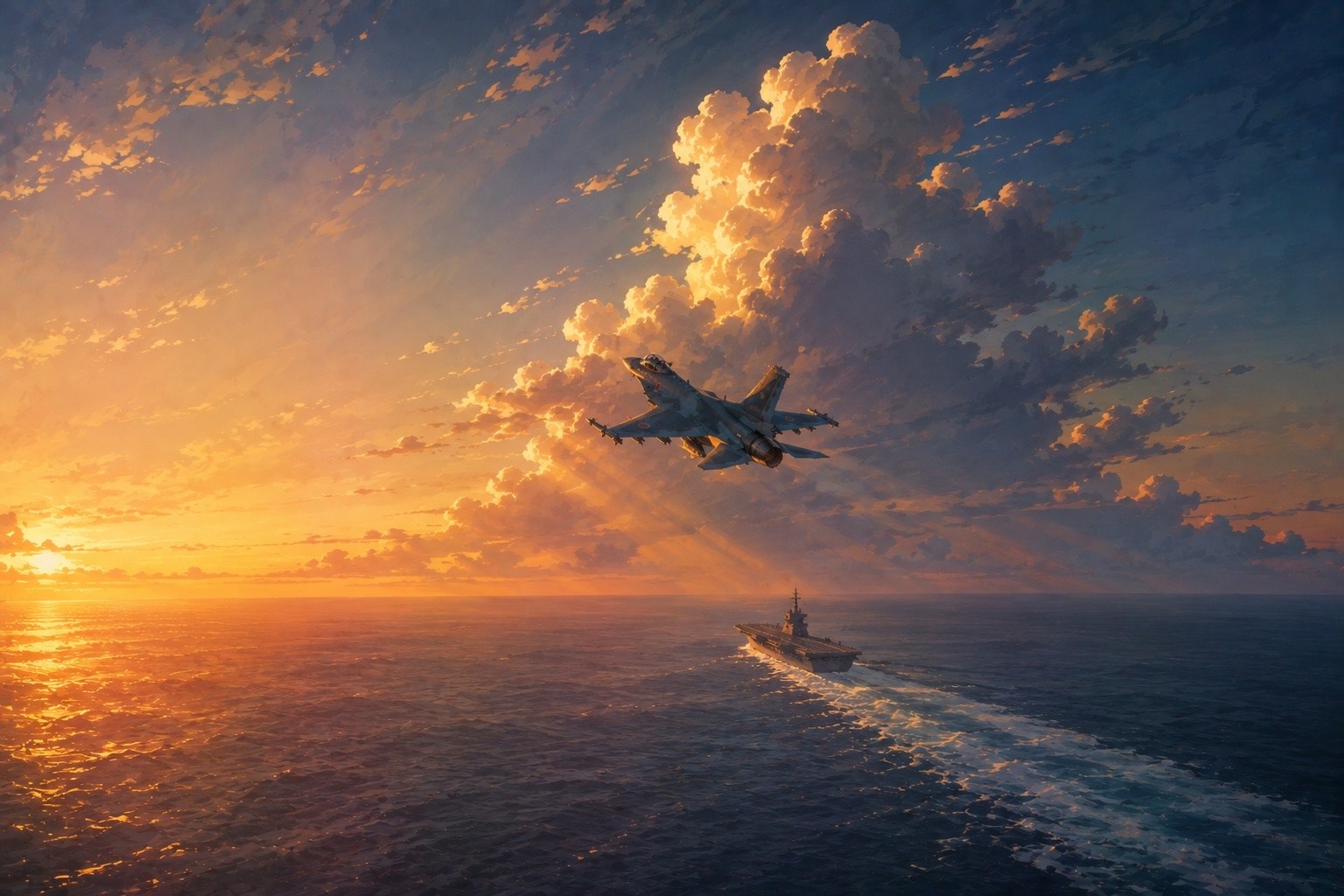
Story
From a coastal runway
to a moving deck.
F-2 MISSIONS is a technical flight simulator built around the training of an F-2 fighter pilot, set against a background of joint exercises and closer international cooperation. You fly the F-2 through the whole course — from your first takeoff at the home base to landing aboard an allied carrier, and on into low-level ingress and formation flying.
Every stage is built on real Japanese terrain. The flying is precise and demanding, and it is also designed so you can simply enjoy the view on the way through.
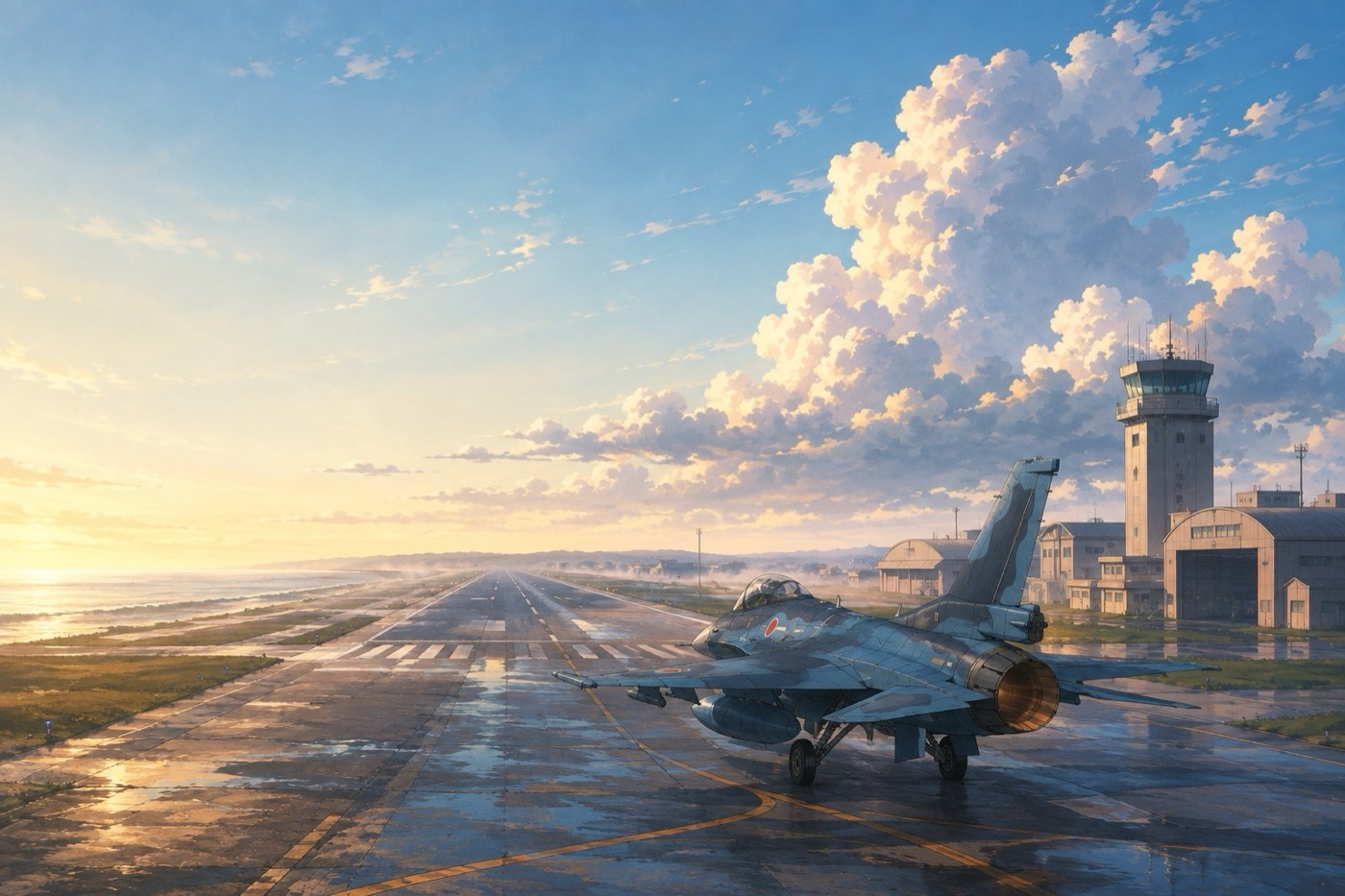
It starts on this runway.
Matsushima Air Base, where the F-2 actually flies, rebuilt at full scale. Both real runways are here — the long 07/25 and the short 33/15, crossing in an X.
The long one teaches you the basics: takeoff, climb, turn, landing. Gates hang in the air along the pattern, so you always know where you are going next.
You fly the same circuit three times — in daylight, at night, and in rain. At night the terrain disappears and only the runway and approach lights remain; in the rain the surface is wet and you get half the braking. Same shape, completely different flight.
The instructor calls each step over the radio. You are never dropped into a mission with no idea what to do.
Matsushima Air Base → Controls → Landing — pattern to full stop → Where the F-2 flies →
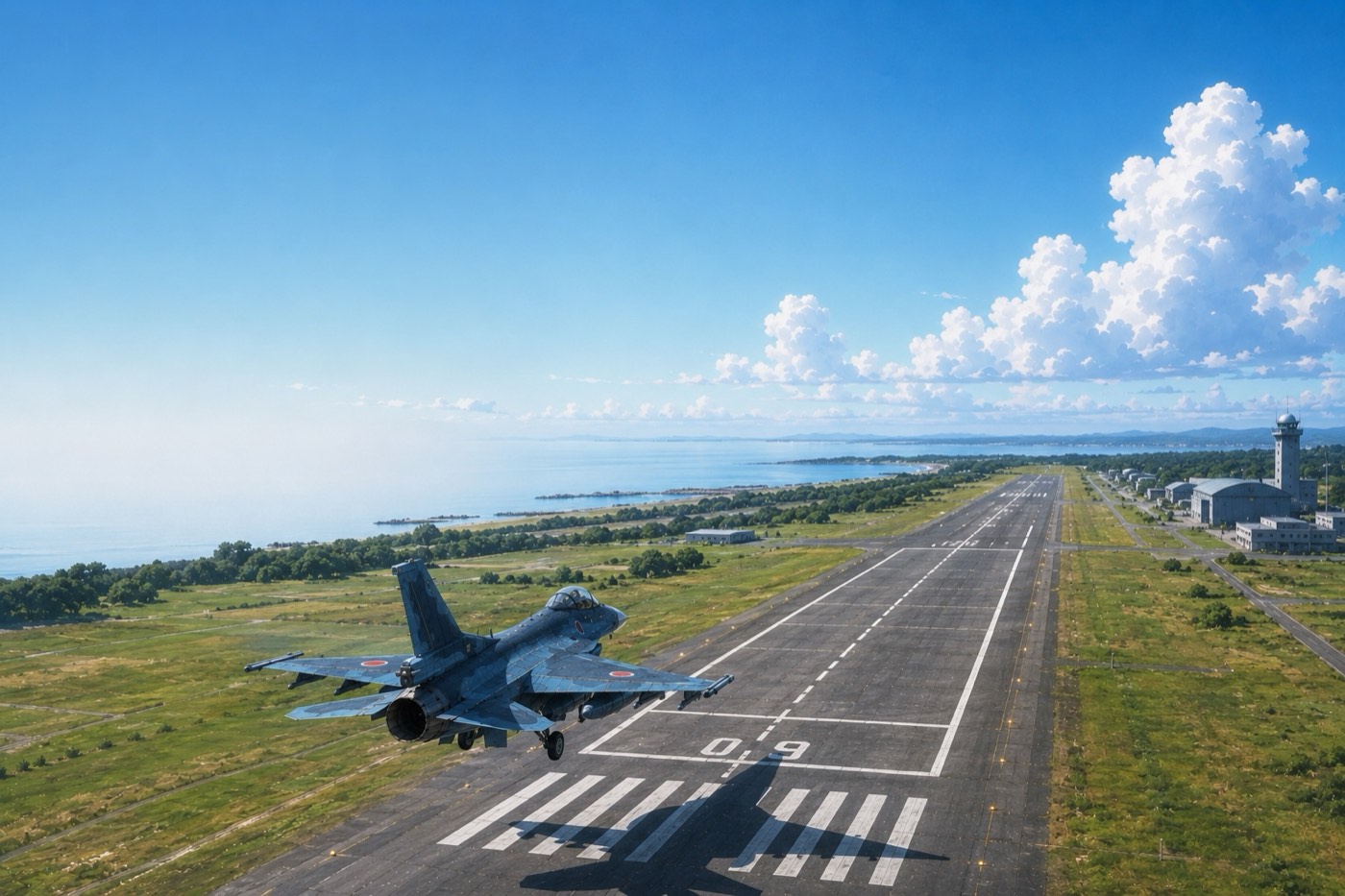
A deck, painted on the ground.
A box the size of a real carrier deck, marked out in white line on ground that does not move. This is where carrier landing practice begins.
Outside the box is the sea. Touch down outside it and the run is over, even though there is pavement under your wheels.
Inside the box, arresting wires. Getting down is not the end of it — you are not aboard until the wire stops you.
There are four wires, and you are aiming for the third. Too near and the ramp is right behind you; float long and you catch nothing. Only the middle one is the answer — and it stays the target for the rest of the year.
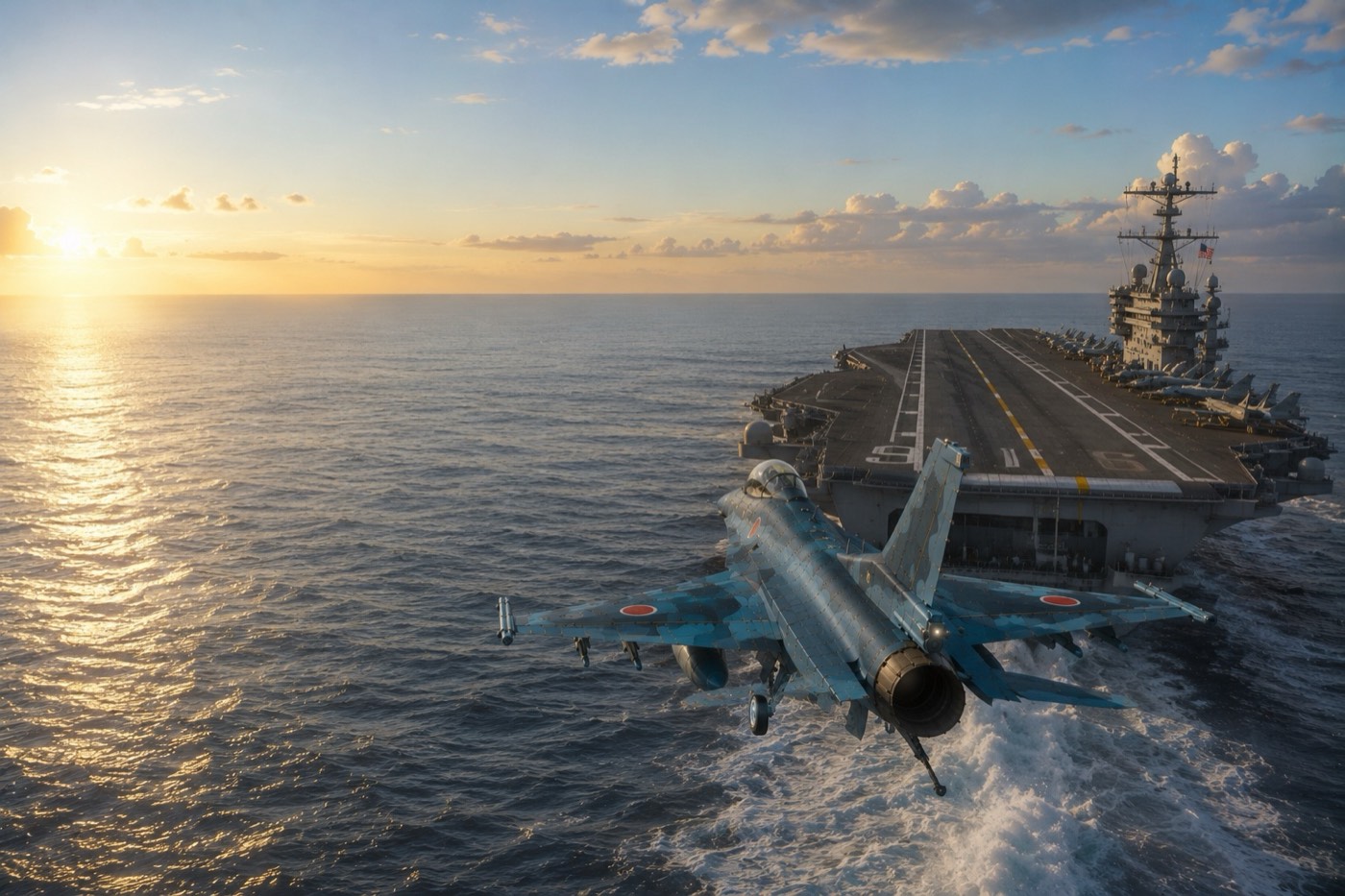
Onto a runway that moves.
The allied carrier VANGUARD. The runway is under way, and it is only a few hundred metres long.
You fly the angle off the FLOLS — the meatball — beside the deck. High or low, the light tells you. You land on the glideslope, not on your eye.
It opens on a calm day and works up through crosswind and swell, then a night trap under nothing but moonlight, and finally a rendezvous that does not happen — you have to find the ship yourself.
Float over the wires and you have a bolter: full power, go around, set it up again. Every landing is scored on sink rate, centreline, wire, and angle of attack, so you always know what was soft.
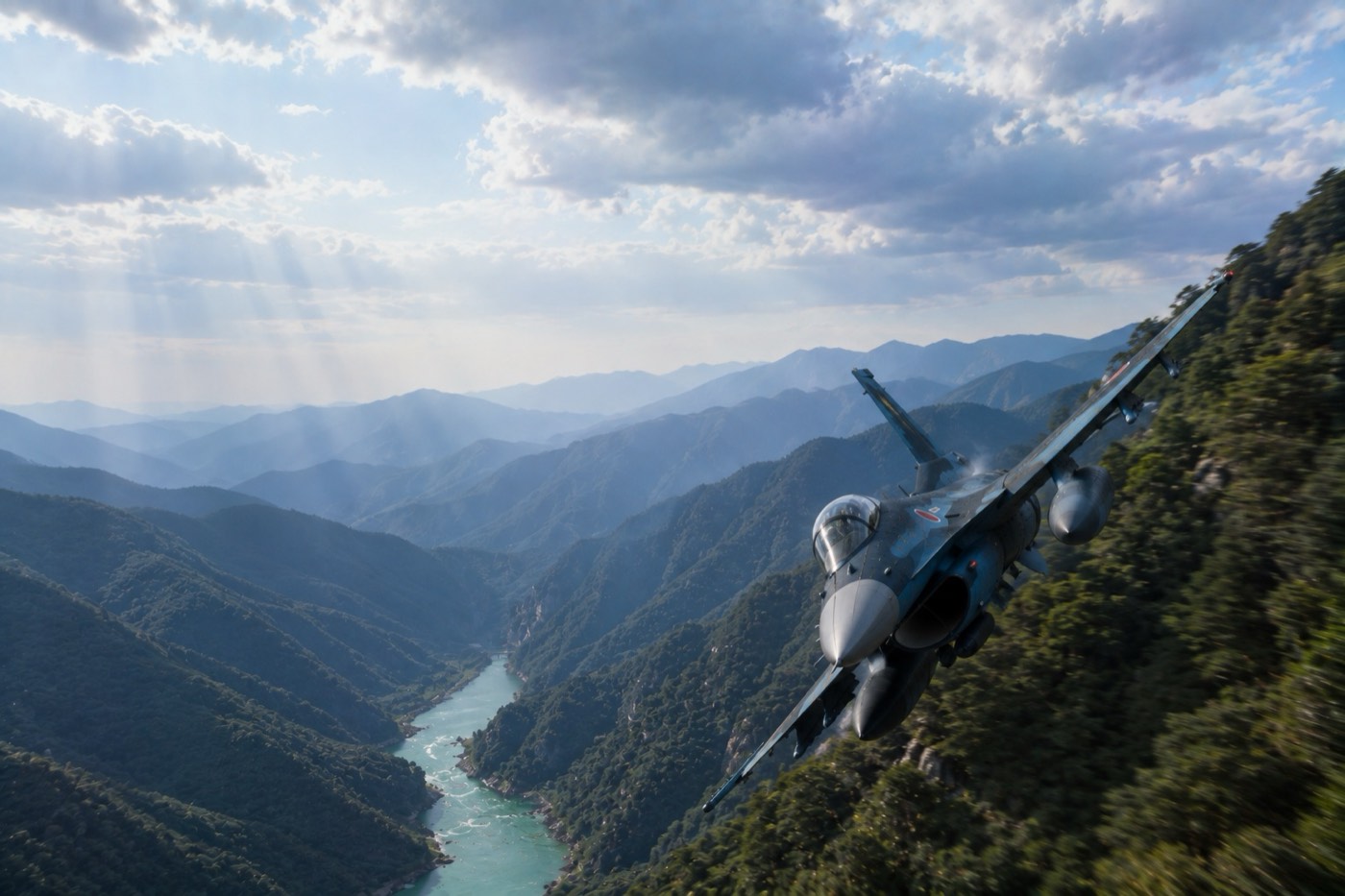
Japanese valleys, full scale.
Off the ship, and low over Japan. The terrain is built from national survey elevation data and reproduced faithfully, at its true dimensions.
Run up Kurobe Gorge from the sea, climb the headwaters of the Ōi River in the Southern Alps, enter Kamikōchi off the surface of Taishō Pond and follow the Azusa between three-thousand-metre walls. Orbit the foot of Mount Fuji — then go over the top, down into the crater.
Hide behind a ridge, turn where the river turns. The terrain itself is the solution.
The best view on this course is in the most dangerous place on it.
Kurobe Gorge → Southern Alps → Kamikōchi → Mount Fuji → Stalls and turns — why you never slow down in a valley → Every place we built →
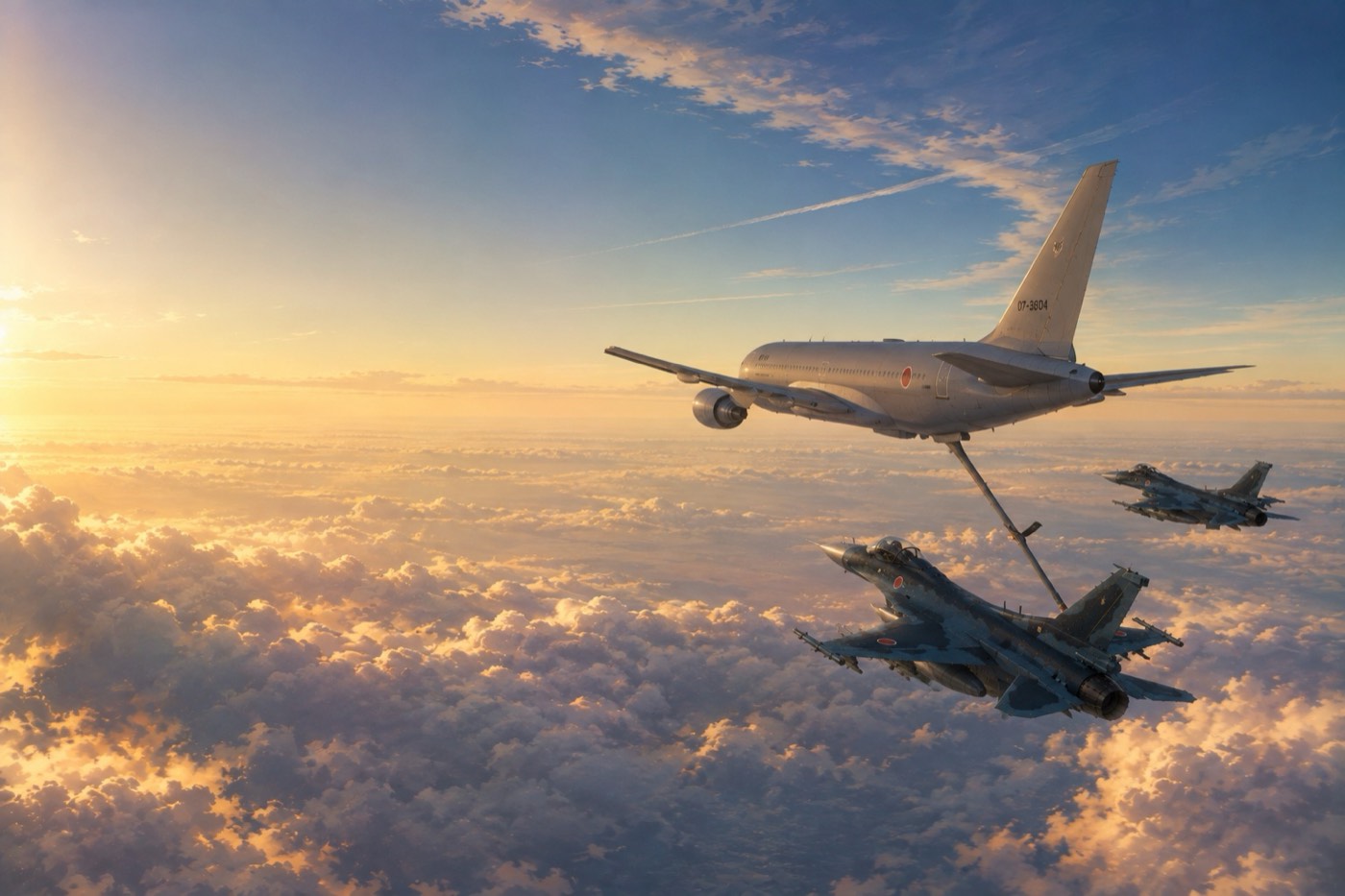
Flying with other people.
First as the wingman. Lead always calls a manoeuvre before flying it. Listen, anticipate, and stay welded to your slot — aft and below the wingtip, where his wings overlap.
Then you are lead. Take your wingman through the gates in order and bring them to the finish. Flying well yourself and flying well with someone behind you turn out to be different skills.
And then the KC-767. Close from below and behind, and hold station under the boom. The tanker is not going to move for you.
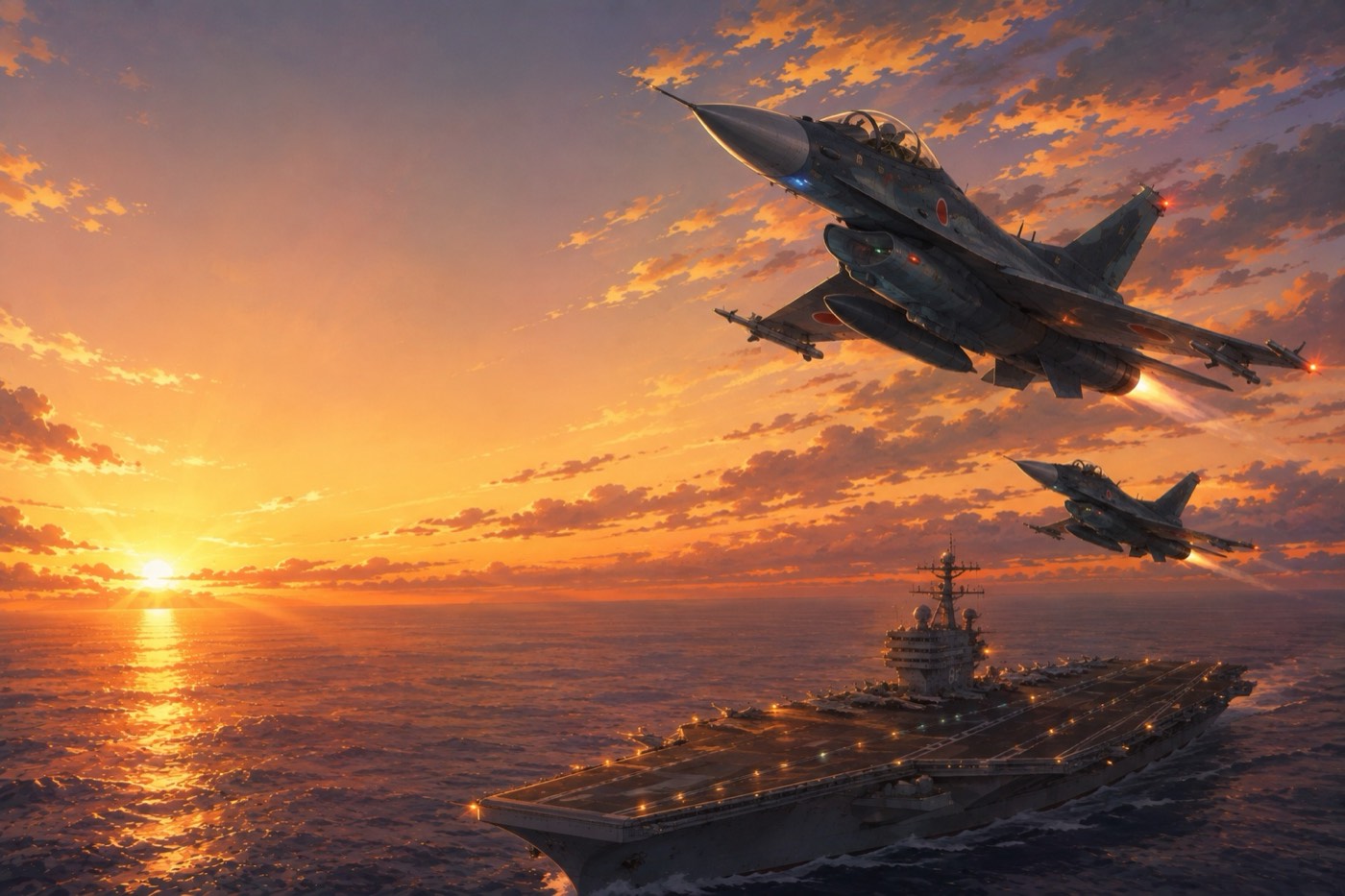
One last pass.
Find your wingman over the sea, join up, and take the formation home to VANGUARD. Up the starboard side, and at the break — you are on your own again.
The takeoff, the painted box, the night sea, the valleys, the formation. All of it goes into this one approach.
A year ago you could not reach this deck alone.
Today, bring someone home with you.
Out now on the App Store
iPhone / iOS 17.0 or later.Free download, with in-app purchases.
Still in development.
F-2 MISSIONS is under active development. Join the mailing list and we will email you when new missions, updates, and the Android / Steam releases land.